The stakes are higher than you might think. Your packaging choices directly impact brand perception, customer retention, shipping costs, and whether your box gets that coveted "unboxing" feature on social media. In fact, a 2024 survey from Mondi found that 88% of consumers prioritize packaging that protects their products, while 47% would be discouraged from buying again if the packaging is excessive.
This guide breaks down what you need to know to create packaging that protects your products, delights your customers, and supports your bottom line.
Key Takeaways
- Great subscription box packaging balances product protection, brand experience, and cost-effectiveness.
- Key factors include box style (mailer boxes are the standard), material (Kraft vs. white), and size optimization for shipping rates.
- A memorable unboxing experience relies on custom printing, thoughtful inserts, and sustainable materials.
- Partnering with an experienced print and promotions firm helps you create high-impact packaging on time and within budget.
The Anatomy of Great Subscription Box Packaging
Think of your subscription box packaging as a strategic tool that serves two critical functions: logistics and marketing. It has to get your products from your warehouse to your customer's doorstep safely, but it also has to represent your brand and create a memorable moment.
Core Components
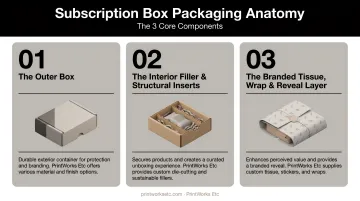
Great packaging is a system of well-chosen parts working together. Here are the three main elements you'll need to consider.
The Exterior Box
This is your first impression. The exterior box is responsible for both protecting the contents and grabbing your customer's attention. The most common styles include:
- Mailer Boxes: The industry standard for subscription boxes. These durable, corrugated mailers (like the popular Roll-End Front Tuck style) are easy to assemble and open like a treasure chest, creating a premium unboxing experience.
- Shipping Boxes: For heavier or bulkier items, a standard Regular Slotted Container (RSC) offers maximum durability and cost-efficiency, though with less of a "reveal."
- Poly Mailers: Best for soft goods like apparel or items that don't require rigid protection. They are lightweight and cost-effective to ship.
Interior Elements (Void Fill & Inserts)
What’s inside the box is just as important as the outside. Interior elements secure your products and enhance the presentation.
- Void Fill: This fills the empty space to prevent items from shifting. Options like crinkle paper or custom-printed tissue paper add a pop of color and a layer of discovery.
- Custom Inserts: For a secure and professional look, custom-designed cardboard or foam inserts hold each product perfectly in place. They create a clean, organized presentation the moment the box is opened.
Printed Materials
Don't forget the paper goods. These pieces guide the customer experience and add a personal touch. This can include welcome cards, product information sheets, "how-to" guides, or even a personalized note that makes the subscriber feel valued.
What to Consider When Choosing Your Packaging
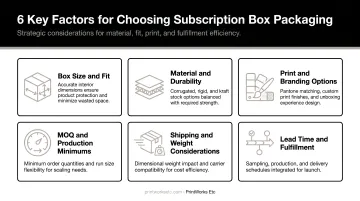
Choosing the right packaging is a balancing act between function, aesthetics, and budget. Let's break down the foundational decisions every subscription business needs to make.
Factor 1: Box Style & Structure
The right style depends entirely on your products and the experience you want to create. Mailer boxes are the go-to for most subscription services because they offer the best combination of durability and presentation. For ultra-luxury products, a rigid set-up box (like an iPhone box) can deliver a high-end feel, while a standard shipping box prioritizes protection over presentation.
Factor 2: Material Selection
The material you choose sets the tone for your brand. The most common options for mailer boxes are:
- Brown Kraft: Gives off a natural, rustic, and eco-friendly vibe.
- Standard White: A clean, versatile canvas that makes printed colors pop.
- Premium White: Offers a silky smooth finish for crisp, high-end graphics.
You'll also need to consider the board thickness. Most mailer boxes use E-flute corrugated board, which is about 1/16-inch thick. It provides excellent structural integrity and a smooth surface for high-quality printing without being bulky.
Factor 3: Size and Dimensional Weight
This is where you can save serious money. "Right-sizing" your box to fit your products snugly is one of the most effective ways to reduce shipping costs. Carriers don't just charge based on weight; they also charge based on size.
Many businesses can take advantage of programs like USPS Cubic Pricing, which offers lower rates for small, heavy packages. To qualify, your box must measure 0.50 cubic feet or less, weigh 20 pounds or less, and have no single dimension longer than 18 inches. Optimizing your box dimensions to meet these thresholds can lead to significant savings.
Factor 4: Print Method
How your design gets onto the box impacts both cost and quality. The two main methods are:
- Digital Printing: Applies ink directly to the box, making it ideal for smaller runs or complex, full-color graphics. This method offers flexibility for changing designs with no printing plate setup fees.
- Flexographic Printing: Transfers ink using printing plates, which is highly cost-effective for large orders (thousands of units). It’s best for simpler designs but has higher initial setup costs.
Factor 5: Budget
Your per-box cost will depend on all the factors above: size, material, print complexity, and order quantity. While some generic corrugated boxes can cost as little as $0.40, a fully custom-printed subscription mailer often falls in a higher range. Define a budget that delivers a great customer experience without sacrificing your profit margins.
Factor 6: Sustainability
Consumers increasingly prefer brands that prioritize the planet. Recent studies show a majority of shoppers want retailers to focus on sustainable packaging. Fortunately, going green doesn't have to break the bank.
- Use Kraft board, which is often made from recycled content.
- Print with water-based or soy-based inks.
- Design your box to be easily recyclable by avoiding non-paper materials.
Best Practices for an Unforgettable Unboxing Experience
Once you've made the foundational choices, you can focus on the details that turn a simple delivery into a share-worthy event.
Custom Exterior and Interior Printing
Printing on the outside of your box builds anticipation from the moment it lands on the doorstep. But the real magic happens when you add a surprise inside. A printed pattern, a bold color, or a clever message on the inside lid creates a "wow" moment that elevates the entire experience.
Layered Reveal
Don't show all your cards at once. Use branded tissue paper or a custom insert to hide the full contents. This creates a sequence of discovery as the customer unwraps each layer, making the experience more engaging and perfect for unboxing videos on social media.
Personalized Inserts
A small personal touch can make a huge impact. Including a printed card that welcomes the subscriber by name or a thank-you note with a handwritten-style font from the founder can build a powerful connection and make your customer feel truly seen.
Themed & Seasonal Packaging
Keep your subscribers excited by introducing limited-edition packaging for holidays, seasons, or special collaborations. This creates a sense of exclusivity and gives loyal customers a reason to stay subscribed—they don't want to miss what's coming next.
Strategic Use of QR Codes
Bridge the gap between your physical product and your digital world. Add a QR code on an insert or the box itself to link customers to product tutorials, exclusive online content, a feedback survey, or a special offer for their next purchase.
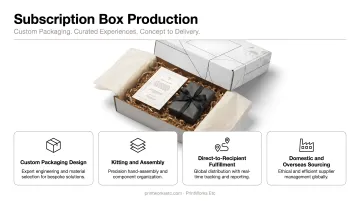
Bringing these elements together requires careful planning. Working with an experienced packaging partner helps ensure your creative vision translates perfectly into a physical product that delights subscribers every time.
How PrintWorks Etc. Can Help You Create the Perfect Package
Navigating the world of custom packaging can be overwhelming. That’s where a partner like PrintWorks Etc. comes in. Unlike DIY online platforms where you're on your own, we're a boutique print and promotions partner that guides you through the entire process, from initial concept to final delivery.
Our high-touch, personalized service means you have a single point of contact managing all the complex details. We handle everything, including:
- Dieline engineering and structural mockups
- Sourcing the right materials for your project
- Coordinating with trusted domestic and overseas vendors
- Finding the most cost-effective solution for your timeline and budget
For example, we managed a gift-with-purchase program for the Disney Movie Club, creating a series of collectible lithographs with custom foil stamping and protective envelopes. Our team handled the project from concept to completion, coordinating with the fulfillment facility to ensure every movie shipped on time.
The program was a massive success, driving a 90% conversion rate on featured titles.
With decades of experience, PrintWorks Etc. absorbs the complexity of vendor management and logistics so you can focus on building your brand.
Frequently Asked Questions
Are subscription boxes profitable?
Yes, they can be highly profitable if you carefully manage costs for customer acquisition, products, and shipping. Smart packaging choices are key to improving margins by reducing shipping fees and boosting customer loyalty.
Are subscription boxes still popular?
Absolutely. The market is projected to grow from $38.9 billion in 2023 to $139.2 billion by 2033, according to a report from Market.us. The industry has shifted toward curated, niche experiences where premium packaging is a key factor in customer retention.
What is the best type of box for a subscription service?
The mailer box is the most popular and effective choice. Its sturdy corrugated structure protects products during shipping, while its "lid-opening" design provides an excellent presentation for a memorable unboxing experience.
How can I reduce shipping costs with my packaging?
The best way is to "right-size" your box to fit the products snugly with minimal empty space. Designing your box dimensions to take advantage of carrier pricing tiers, like USPS Cubic Pricing, can lead to major savings.
What's the difference between digital and flexographic printing for boxes?
Digital printing is ideal for smaller orders needing complex, photo-quality graphics. Flexographic printing is more cost-effective for very large, single-design runs, as the high initial setup cost is spread across thousands of units.
How can I make my packaging more eco-friendly on a budget?
Start by using Kraft (natural brown) corrugated board, which is often made from recycled content. You can also print with water-based or soy-based inks. These are often cost-neutral choices that make a big difference.