
Understanding the investment required is the first step. This article provides a comprehensive breakdown of hotel branding and signage costs, from initial strategy to final installation. We’ll help you budget effectively for a brand that doesn’t just look good, but actively attracts and retains guests.
Key Takeaways
- Total project costs range from $15k for boutiques to $250k+ for luxury resorts.
- Costs depend on brand strategy, signage materials, asset quantity, and permits.
- Budgets are split between brand strategy/design and physical implementation.
- Quality branding drives higher perceived value, direct bookings, and a competitive edge.
How Much Does a Full Hotel Branding & Signage Package Cost?
Hotel branding and signage costs aren't one-size-fits-all. The cost is a strategic investment tailored to your property’s size, market position, and goals. Under-budgeting can lead to a fragmented guest experience, while overspending on unnecessary elements can hurt profitability.
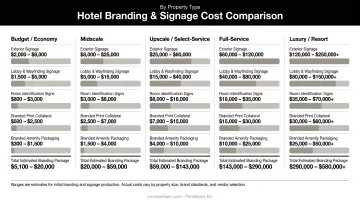
Projects typically fall into these general ranges:
Boutique/Independent Hotel (15-50 rooms): $15,000 – $80,000
For a smaller, independent property, the brand is everything. This budget focuses on creating a unique identity that tells a story and attracts a specific type of traveler.
This budget typically covers:
- Brand strategy and visual identity (logo, color, typography)
- One primary exterior sign
- A basic wayfinding package
- Essential print collateral like key cards and business cards
- Best For: New independent hotels or existing properties undergoing a major repositioning to create a distinct "vibe."
Mid-Range/Franchise Hotel (50-150 rooms): $50,000 – $150,000
These properties often need to balance corporate brand standards with the need to stand out in crowded markets. The budget is larger to accommodate more extensive signage and compliance requirements. For context, a single new exterior brand sign for an upscale hotel can cost over $52,000 on its own.
This budget typically covers:
- Adherence to franchise brand standards
- Extensive exterior signage (pylon, monument signs)
- Comprehensive interior wayfinding and ADA-compliant signs
- Collateral for on-site amenities (restaurants, conference rooms)
- Best For: Hotels that must meet corporate standards while executing a high-quality, durable signage package.
Luxury Hotel/Resort (150+ rooms): $150,000 – $250,000+
At the luxury level, branding must convey exclusivity and quality across a complex property with multiple revenue centers. The investment reflects the need for premium materials, custom fabrication, and a cohesive experience at every touchpoint.
This budget typically covers:
- In-depth brand strategy and sub-brands for amenities (spas, restaurants)
- Custom, high-end architectural and digital signage
- Extensive print collateral systems
- Use of premium materials throughout the property
- Best For: Large-scale properties where the brand must be flawlessly integrated across a every step of the guest experience.
Key Factors That Drive Hotel Branding & Signage Costs
Understanding the key drivers behind branding and signage costs is the first step to will help you allocate your budget effectively.
Scope of Brand Strategy
There's a significant cost difference between a simple logo design and a comprehensive brand strategy. A full strategy involves market research, guest persona development, crafting a brand narrative, and creating voice and tone guidelines. The deeper you go, the more it costs, but the stronger the foundation for your brand will be.
Signage Type & Complexity
The type of sign you choose has a massive impact on the budget. Basic, non-illuminated signs can cost $1,000–$3,500, while standard illuminated signs like channel letters or lightboxes typically run $3,000–$7,000. Large, freestanding pylon and monument signs are highly visible but require a more significant investment in fabrication, engineering, and installation.
Material Quality & Durability
The materials you select affect both upfront cost and long-term maintenance. Cost-effective options like PVC and HDU foam keep initial costs down (a $54 sign in PVC might be $81 in aluminum). In contrast, premium materials like brushed aluminum, stainless steel, or natural stone create a high-end look but come at a higher price.
Number of Physical & Digital Assets
Every single touchpoint is a branding opportunity, and each one adds to the cost. The list can be extensive:
- Exterior building and monument signs
- Interior wayfinding and directional signs
- ADA-compliant signs and room numbers
- Restaurant menus and spa brochures
- Key cards, stationery, and in-room collateral
- Staff uniforms and vehicle wraps
- Website and digital marketing assets
Administrative & Installation Costs
These "hidden" costs are often overlooked but are critical to budget for.
- Professional site surveys are needed to determine placement, visibility, and structural requirements.
- Sign permit fees vary wildly by city. An application in Indianapolis might be $32 plus a few hundred dollars, while a zoning review in Chicago starts at $200.
- Engineering reports are required for large structures like monument or pylon signs. Cities like San Diego mandate professional engineering for any monument sign over six feet tall.
- Installation labor and equipment (like cranes and bucket trucks) for safely and correctly installing the signs.
A Detailed Cost Breakdown: From Strategy to Installation
Hotel branding projects generally unfold in two phases: creating the blueprint and then building it.
Phase 1: Brand Strategy & Design Costs (The Blueprint)
This is the creative and strategic foundation. These are typically one-time agency or designer fees that define how your brand will look, feel, and communicate.
Brand Strategy & Messaging: This phase answers the big questions: Who are you, who are your guests, and why should they choose you? It involves the research, positioning, and storytelling that define your hotel's identity.
A strong brand story directly impacts perceived value. A 2024 study found that positive brand perception influences booking intentions by increasing perceived quality and social value.
Visual Identity Design: This is where the strategy becomes tangible. It includes the design of your logo system, color palette, typography, and the creation of a brand guidelines document that ensures consistency everywhere.
Phase 2: Physical Asset & Implementation Costs (The Build-Out)
This is where the blueprint comes to life through manufacturing and installation.
Exterior Signage: This covers the fabrication of your most visible assets—the primary building signs, monument signs at the entrance, and any large pylon signs seen from the road.
Interior Signage: This includes all the signs inside your property, such as lobby signs, a complete wayfinding system, room numbers, and all legally required ADA-compliant signs.
Printed Collateral & Promotional Items: This category covers everything a guest can touch and feel, which is critical for a memorable experience. It includes key cards, menus, spa brochures, stationery, and branded in-room amenities.
A procurement partner like PrintWorks Etc can manage the production of these diverse items. Their high-touch service ensures brand consistency across all materials, from welcome cards and do-not-disturb tags to restaurant menus.
Installation & Permitting: This final piece of the budget covers the labor, equipment (like crane trucks), and municipal fees required to get your signs approved and installed.
Low-Cost vs. High-Cost Hotel Branding: What’s the Real Difference?
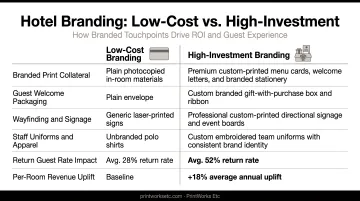
While premium branding and signage require a higher upfront investment, they drive revenue and deliver a stronger return over time. Here’s a breakdown of the key differences:
Guest Experience & Perception
- Lower-Cost: Leads to a generic, inconsistent look. Flimsy key cards, poorly printed menus, and cheap signs lower the perceived value of a guest's stay, making it harder to justify room rates.
- Higher-Cost: Builds a cohesive, immersive atmosphere. Premium materials and a consistent visual story communicate quality, build trust, and justify higher room rates.
Durability & Maintenance
- Lower-Cost: Uses materials that fade, chip, or break down quickly. This approach leads to higher long-term costs due to frequent repairs and replacements.
- Higher-Cost: Employs durable, weather-resistant materials and superior manufacturing. Brand assets look pristine for years with minimal upkeep, protecting the initial investment.
Long-Term ROI
- Lower-Cost: Struggles to attract direct bookings, leading to heavy reliance on Online Travel Agencies (OTAs) that charge commissions of 15% to 30% on every booking.
- Higher-Cost: Builds brand recognition that drives direct bookings. According to Skift Research, branded hotels generate a 6-point higher share of sales from direct bookings, lowering acquisition costs and boosting profitability.
How to Budget Smartly for Your Hotel's Branding Project
Planning your investment wisely ensures you get the most impact without overspending.
- Audit the complete guest journey by walking through your property from a guest's perspective, both online and in person. Note every brand touchpoint to create a comprehensive list and prioritize the most urgent updates.
- Define a clear project scope early on. Decide if you're doing a minor refresh (like updating collateral) or a full rebrand (a new logo and strategy) to prevent "scope creep" and budget overruns.
- Request detailed quotes from several partners. Ensure they provide a cost breakdown for strategy, design, manufacturing, and installation, and ask about easily missed expenses like permits or maintenance.
Frequently Asked Questions
How much does professional signage cost?
Costs range from a few hundred dollars for a simple, non-illuminated interior sign to tens of thousands for large, custom-fabricated, and illuminated architectural signs. The final price depends entirely on size, materials, complexity, and illumination.
What are the 4 types of signage?
For hotels, signage generally falls into four categories: Identification (the main hotel sign), Wayfinding/Directional (signs pointing to the lobby, pool, or parking), Informational (lobby hours, Wi-Fi info), and Regulatory (ADA-compliant, exit, and safety signs).
Why is professional branding crucial for an independent hotel?
A strong brand is an independent hotel's best tool to compete against large chains. It creates a unique identity, tells a compelling story that attracts a target audience, and builds the trust needed to drive valuable direct bookings.
How long does a hotel branding and signage project typically take?
A full project typically takes 3-6 months or longer. This timeline includes brand strategy, design approvals, fabrication, installation, and municipal permitting, which can take several weeks on its own.
What are the ongoing costs associated with hotel signage?
Budget for ongoing expenses such as electricity for illuminated signs, routine cleaning to keep them looking sharp, and occasional maintenance or repairs for damage caused by weather or accidents.
Are there hidden costs in a hotel signage project?
Yes. Be sure to budget for potential costs like municipal permits, engineering surveys for large signs, dedicated electrical work, and any landscape modifications needed for installation.