Introduction
Printed marketing materials aren't going anywhere. Business cards still change hands at every networking event. Brochures still sit on reception desks. Direct mail still lands in real hands — and according to USPS research, 79% of marketing executives identify it as their best-performing channel.
The real challenge is choosing the right service. Platforms vary widely on turnaround time, order minimums, color accuracy, and how much hand-holding they offer — and those differences matter depending on what you're producing.
Some businesses need a quick self-serve order. Others are managing multi-item campaigns across brochures, postcards, signage, and packaging — and need more than an upload form. Picking the wrong vendor wastes time, money, and brand equity.
Here's a breakdown of the five best digital printing services for marketing materials — what each does well, where each falls short, and which type of buyer each one actually serves.
Key Takeaways
- The digital printing market is projected to reach $53.32 billion by 2031 — print remains a serious business investment
- Self-serve platforms (VistaPrint, GotPrint, 48HourPrint) work well for straightforward, single-vendor orders
- Moo wins on print quality, GotPrint on bulk pricing, and 48HourPrint on turnaround speed
- Digital printing beats offset for runs under 500–1,000 pieces, variable data, and fast turnarounds
- Multi-material campaigns are easier to manage through a single full-service partner than juggling multiple platforms
What Is Digital Printing and Why Does It Matter for Marketing?
Digital printing transfers a digital file directly onto paper, card, vinyl, or fabric using inkjet or laser technology — no printing plates required. That absence of plates is the key difference from offset printing, which uses plates and ink rollers and requires significant setup before a single sheet prints.
For marketing materials, that distinction matters practically:
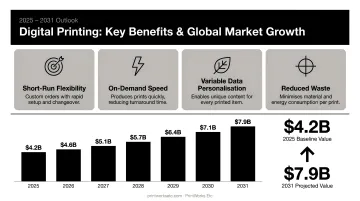
- No minimum quantities — order 50 postcards or 5,000 without penalty
- Fast turnaround — files go straight to press, often same- or next-day
- Variable data printing — personalize each piece with unique names, offers, or images
- Cost-effective short runs — digital printing is typically less expensive for runs under 500–1,000 pieces because there are no plate or setup costs
The market reflects how seriously businesses treat print. Mordor Intelligence projects the global digital printing market will grow from $34.33 billion in 2025 to $53.32 billion by 2031 — a 7.61% compound annual growth rate. Those numbers reflect a straightforward reality: physical marketing materials remain a deliberate budget line because a well-printed piece lands differently than a display ad scrolled past in two seconds.
Best Digital Printing Services for Marketing Materials
These five services were evaluated on product range, print quality, pricing, turnaround speed, design tools, and suitability for core marketing materials.
VistaPrint
VistaPrint is the most recognized online print platform in the US, with one of the broadest product catalogs available — business cards, brochures, banners, signage, apparel, and promotional products all under one roof.
Its drag-and-drop design tool is genuinely beginner-friendly. The platform also includes an AI Logomaker, a Vista x Wix website builder, and NFC-enabled business cards — physical cards with an embedded chip that links to a digital profile when tapped.
Postcard stocks range from standard 14 pt glossy and matte to premium soft-touch, linen, bamboo, hemp-blend, and cotton, with foil and embossed finish upgrades available.
| Feature | Detail |
|---|---|
| Key Features | Wide product catalog, drag-and-drop design tool, AI Logomaker, NFC business cards, eco-friendly stocks, foil/embossed finishes |
| 500 Postcards (4"×6") | Price not confirmed at time of research — check current pricing at vistaprint.com |
| Best For | Small businesses and startups wanting an all-in-one self-serve print and branding platform |
GotPrint
GotPrint is built for volume. Its pricing scales aggressively at higher quantities, making it one of the most cost-efficient options for businesses running high-volume campaigns — flyers, postcards, business cards, and brochures at bulk rates that outperform most competitors.
The platform organizes products by industry, which helps buyers navigate quickly. The Printograph broker program offers free sign-up, wholesale pricing, and blind drop shipping — a practical option for marketing agencies sourcing print for clients. Design services come in three tiers:
- Silver ($39) — 2–4 business day proofing
- Gold ($49) — 2–4 business day proofing
- Platinum ($69) — 2–4 business day proofing
| Feature | Detail |
|---|---|
| Key Features | Bulk pricing, industry-specific navigation, broker/reseller program, tiered design services |
| 500 Postcards (4"×6") | Price not confirmed at time of research — check current pricing at gotprint.com |
| Best For | Budget-conscious businesses and agencies ordering large quantities of standard marketing materials |
UPrinting
UPrinting's real advantage is range: it covers the broadest product selection of any platform on this list. Beyond standard marketing collateral, it offers custom packaging including mailer boxes, product boxes, pouches, box sleeves, soap boxes, and wine mailer boxes in both cardstock and corrugated cardboard.
Postcard turnaround options run 1–3 business days. Design templates are limited, so bringing your own files is recommended. For any business that needs marketing materials and custom packaging managed through a single vendor, UPrinting is the most practical self-serve option.
| Feature | Detail |
|---|---|
| Key Features | Custom packaging (boxes, pouches, sleeves), wide product variety, fast postcard turnaround, custom size options |
| 500 Postcards (4"×6") | Price not confirmed at time of research — check current pricing at uprinting.com |
| Best For | Product-based businesses, retailers, and restaurants needing both marketing collateral and custom packaging |
Moo
For print quality and material feel, Moo sits above everything else on this list. Based in the UK with strong US operations, it delivers the best tactile experience of any self-serve platform reviewed here. Its postcards start on 16–17 pt stock, with Super (18 pt) and Luxe (32 pt, four layers of Mohawk Superfine paper) upgrades available. Raised Gold Foil and Silver Foil finishes are offered on 18 pt with Soft Touch coating.
Printfinity lets you print a different design on every card in a run at no extra cost — up to 25 design variations per postcard pack. The Moo Promise covers replacement or refund if quality doesn't meet expectations.
| Feature | Detail |
|---|---|
| Key Features | Printfinity (multiple designs per run), premium stocks and finishes, satisfaction guarantee, next-day delivery on eligible items |
| 500 Postcards (4"×6") | $149.00 (confirmed pricing as of June 2025) |
| Best For | Creative agencies, consultants, and premium brands where print quality and first impression are non-negotiable |
48HourPrint
48HourPrint is the speed option. Standard 4"×6" postcards can be ready in 1 business day, with options running 1–5 business days across the product range. Sticker orders ship in as little as 24 hours when confirmed by 8 p.m. ET.
Its sticker and label selection is one of the strongest available, covering roll stickers, cut-to-size, sticker sheets, and specialty materials:
- White vinyl, clear BOPP, and removable BOPP
- Silver metallic and rainbow holographic
Direct mail services cover postcard printing and mailing, list rental, addressing, sorting, and Every Door Direct Mail (EDDM).
| Feature | Detail |
|---|---|
| Key Features | 1-business-day postcards, extensive custom sticker/label options, direct mail services, wide size range |
| 500 Postcards (4"×6") | Price not confirmed at time of research — check current pricing at 48hourprint.com |
| Best For | Businesses with tight deadlines, event-driven campaigns, or those needing custom labels and stickers alongside marketing collateral |
Key Marketing Materials and When to Use Digital Printing
Not all marketing materials benefit from digital printing equally — and not all formats suit every campaign goal. Here's where digital printing performs best.
Core Materials by Priority
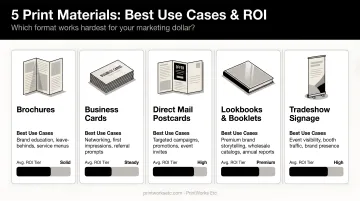
- Business cards: Go 16 pt stock or heavier. Soft-touch laminate or spot UV makes a measurable difference in perceived quality.
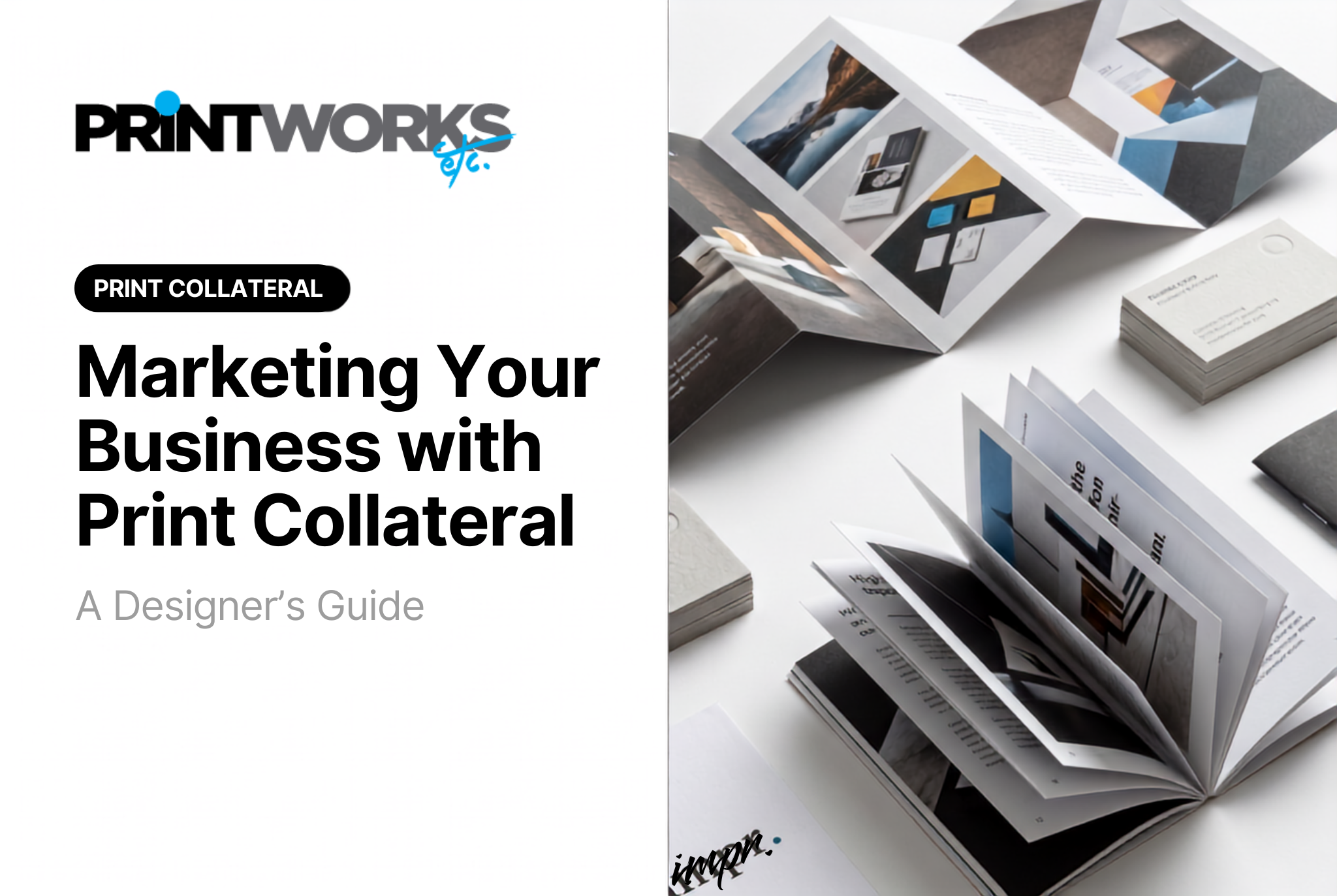
- Brochures and flyers: Color accuracy and paper weight drive results. Tri-fold, bi-fold, and gate-fold options vary by vendor — confirm bleed requirements before submitting files.
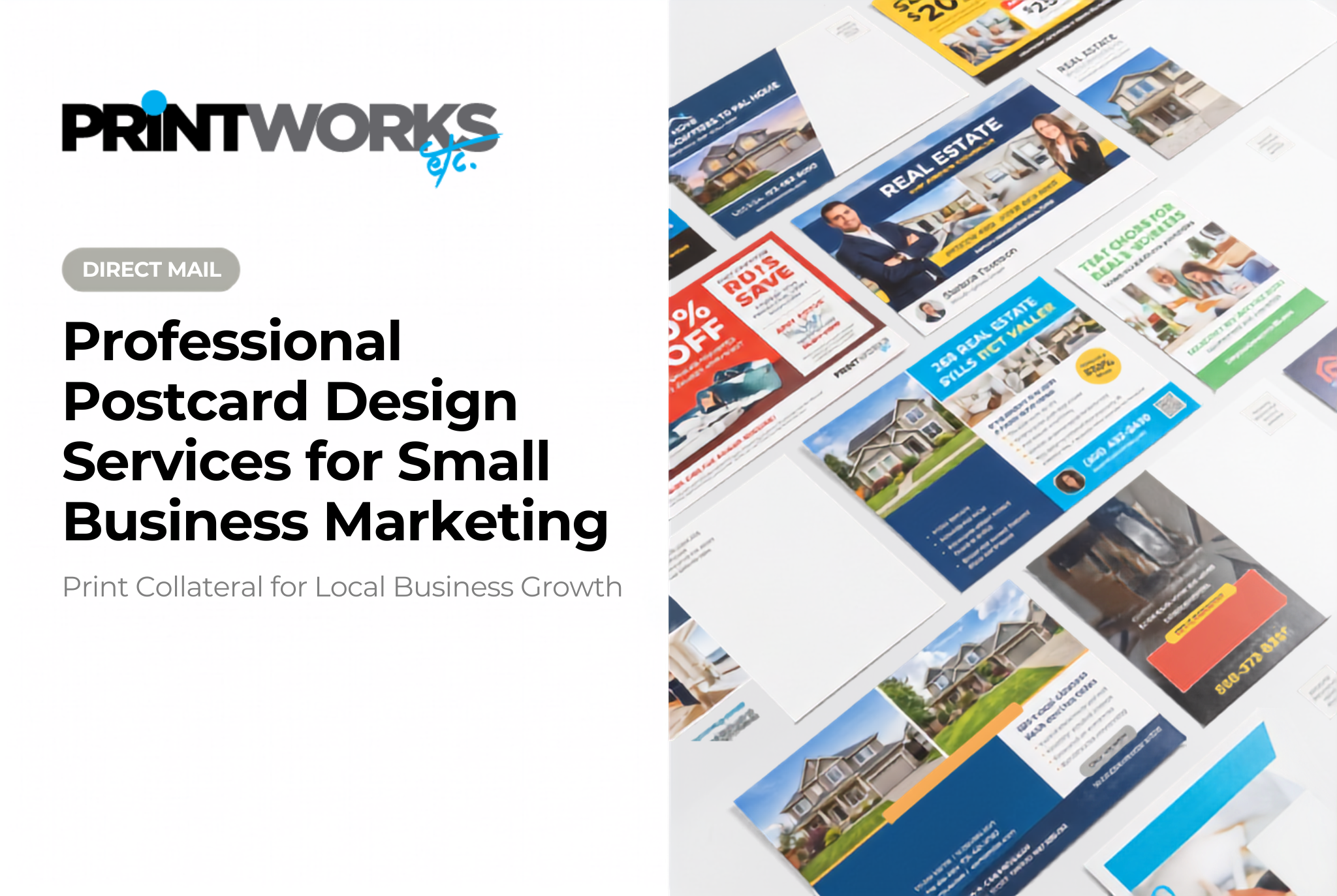
- Postcards and direct mail: One of the strongest print ROI formats. An ANA study found postcards delivered 92% ROI for house lists, and USPS data shows 66% of US-based marketers use them in direct mail campaigns.
- Banners and event signage: Turnaround speed and size range matter more than paper stock here. Not all providers offer large-format; verify size options before placing your order.
- Labels and stickers: Material choice — vinyl, BOPP, or metallic — determines durability and finish. Look for providers that offer material samples or mockups before full production runs.
Digital vs. Offset: The Practical Threshold
| Scenario | Best Choice |
|---|---|
| Under 500–1,000 pieces | Digital printing |
| Variable data or personalization | Digital printing |
| Quick turnaround (days, not weeks) | Digital printing |
| Testing a new design | Digital printing |
| Very high volume (10,000+ identical pieces) | Offset printing |
How to Choose the Right Digital Printing Service
Five Evaluation Criteria
- Product range — Does the platform print everything you need, or will you manage multiple vendors?
- Print quality and finishing — Check sample packs before committing to large orders; finishing options (foil, soft-touch, UV) vary widely
- Pricing transparency — Look for all-in pricing that includes shipping; some platforms show low base prices that climb significantly at checkout
- Turnaround and shipping reliability — Confirm production time plus shipping time; they're separate
- Design support — If you don't have print-ready files, check whether the platform offers design tools or templates matched to your material type
Common Mistakes to Avoid
- Choosing on price alone — Budget platforms often sacrifice finishing quality or stock weight, which shows in the final product
- Missing file prep requirements — Low-resolution images, missing bleed (typically 0.125" on all sides), incorrect color mode (CMYK vs. RGB), and unembedded fonts are the most common reasons files get rejected or print poorly
- Mismatching vendor to material type — A platform strong on business cards may not handle large-format signage well; check the specific product, not just the brand name
When a Self-Serve Platform Isn't the Right Answer
Self-serve platforms work well for single-product, one-off orders. That changes fast when a campaign requires multiple material types — brochures, postcards, branded packaging, event signage, and promotional items — each with different vendors, file requirements, and production timelines.
For businesses managing that kind of complexity, a full-service print partner handles vendor sourcing, color approval, production scheduling, and delivery as a single engagement. PrintWorks Etc, a WBEC-certified boutique print and promotions agency based in Redondo Beach, California, manages this type of multi-material campaign work — from concept through delivery — for clients ranging from Fortune 500 companies to local businesses across Southern California.
Their Disney Movie Club collectible lithograph program, for example, combined custom print production, specialty packaging, and fulfillment into one managed program that achieved a 90% conversion rate.
Conclusion
The best digital printing service isn't automatically the cheapest or the most feature-rich — it's the one that matches your production requirements, timeline, and quality standards without creating more work than it saves.
For single-product orders, here's a quick reference:
- GotPrint — best for volume and price
- Moo — best for premium quality
- 48HourPrint — best for fast turnaround
- VistaPrint — best for all-in-one simplicity
- UPrinting — best when packaging is part of the order
For ongoing campaigns, multi-material programs, or projects that need someone to manage the process rather than just print the files — consider whether a managed service partner makes more sense than coordinating vendors, approvals, and production timelines across multiple platforms on your own.
PrintWorks Etc works with businesses across the Los Angeles and Southern California area that need a trusted partner with decades of print production experience and hands-on project management — from first proof to final delivery. Reach out to the PrintWorks Etc team to talk through your project.
Frequently Asked Questions
How much does a 300-page book cost to print?
Pricing depends on binding type (saddle stitch, perfect bound, spiral), paper stock, quantity, and color vs. black-and-white interior. Cost per copy drops significantly at higher quantities, so request a quote from your printer with your exact specifications.
What is the difference between digital printing and offset printing for marketing materials?
Digital printing transfers a file directly to paper — no plates, lower setup cost, better for short runs and variable data. Offset uses plates and ink rollers, making it more economical at very high volumes (typically 5,000+ identical pieces).
What types of marketing materials are best suited for digital printing?
Business cards, brochures, flyers, postcards, banners, labels, and short-run promotional items all work well with digital printing — particularly when you need customization, fast turnaround, or quantities below 1,000 units.
How do I prepare files for a digital printing service?
Save files as high-resolution PDFs at 300 DPI minimum, include 0.125" bleed on all sides, embed all fonts, and confirm color mode (CMYK, not RGB) with your printer before submitting.
Is digital printing cost-effective for small businesses?
Yes. Digital printing has no plate costs or setup fees, supports low minimum quantities, and allows fast reprints when designs change — making it practical for testing and adjusting designs without large upfront investment.